Filing a Concrete Leveling Damage Claim: A Step-by-Step Guide for Des Moines Homeowners
Filing concrete leveling damage with your homeowners insurance is confusing because most policies draw a hard line between sudden damage and slow settling. Adjusters know that line. Most homeowners do not. This guide walks you through the process of filing concrete leveling claims step by step, so you can figure out whether your sunken slab or cracked driveway might qualify, gather documentation the adjuster will actually accept, and avoid paying out of pocket for something your policy should cover.
One honest note up front: many concrete claims get denied because normal settling is excluded from most policies. That is not a reason to skip filing. It is a reason to file carefully, with the right cause of damage documented, so a covered event does not get waved off as ordinary wear.
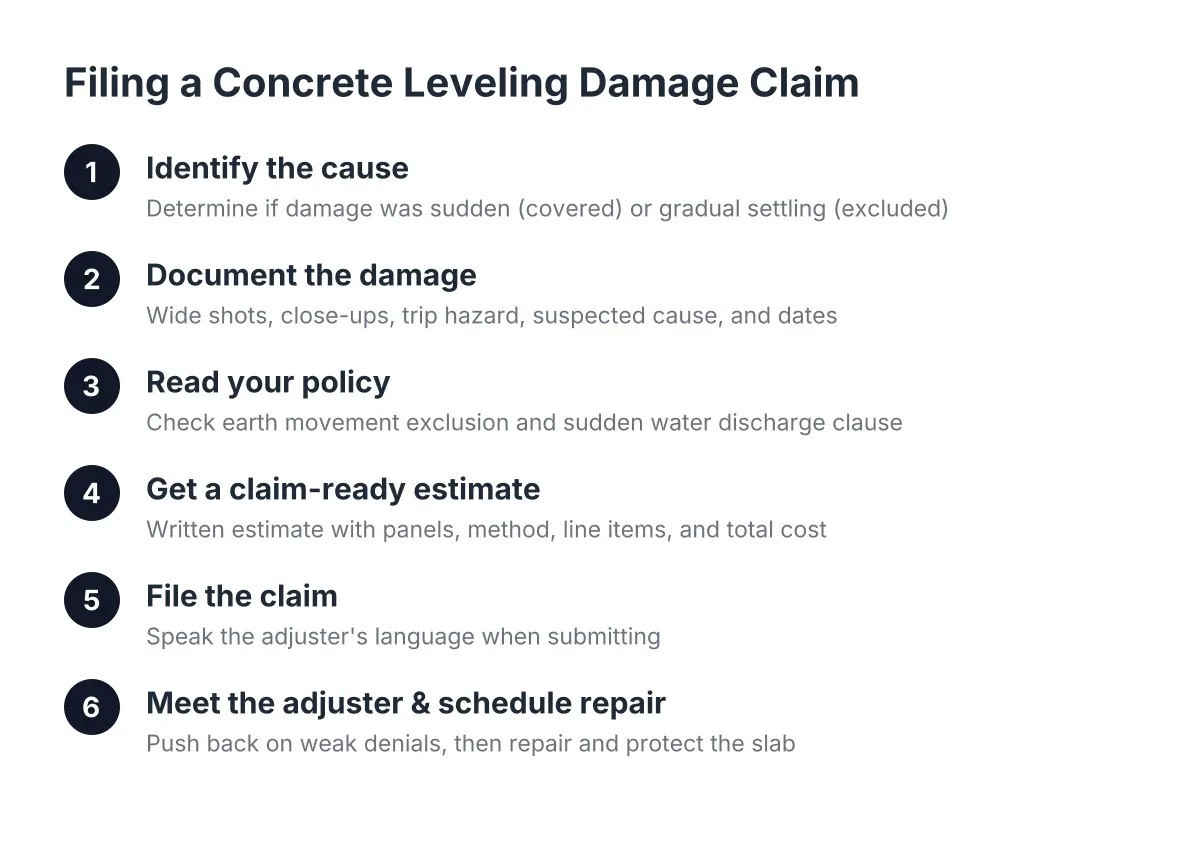
Step 1: Identify What Caused the Damage Before You Call Anyone
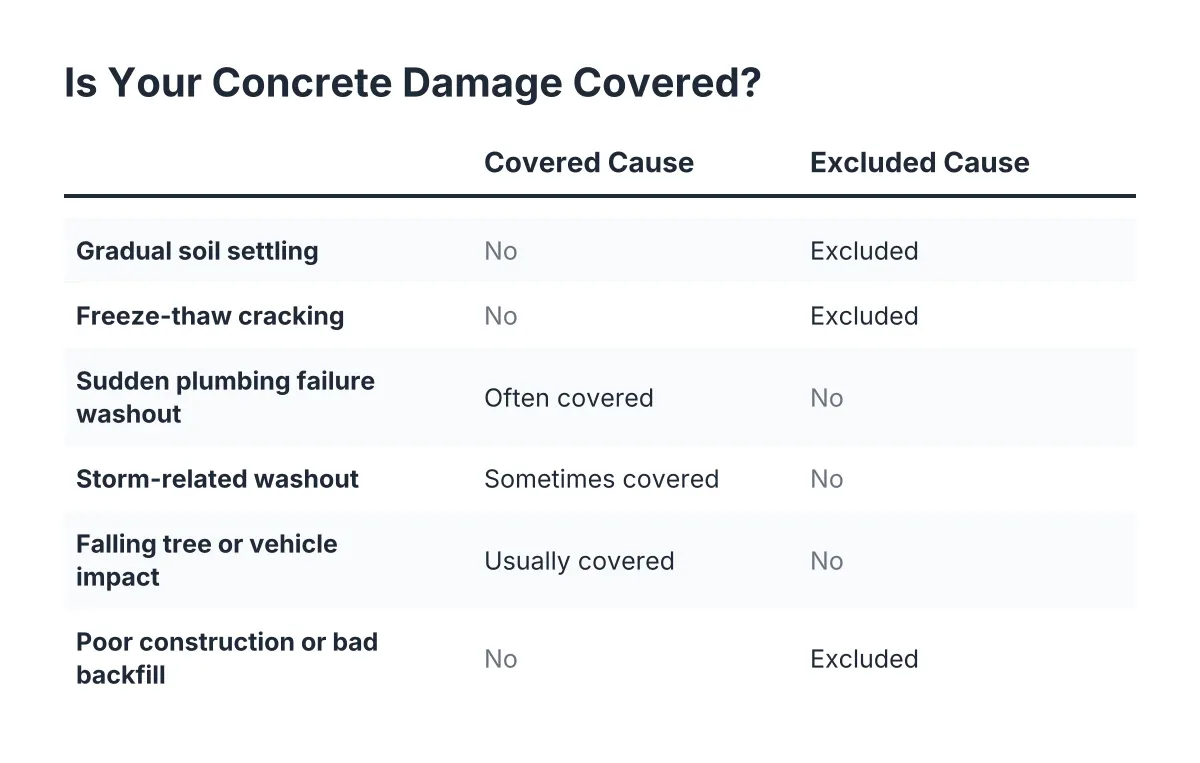
Coverage almost always turns on cause, not on how bad the damage looks. Homeowners policies typically cover sudden, accidental events. They typically exclude gradual earth movement, normal settling, and wear over time.
So before you call your insurance company, work out what actually happened. In central Iowa, the usual suspects are:
- A plumbing or water line failure that washed out the soil under a slab. Often covered, because it is sudden and accidental.
- A single severe storm that flooded the yard and undermined a walkway or driveway panel. Sometimes covered, depending on your policy and whether you carry flood coverage.
- Freeze-thaw cycles heaving and dropping slabs over several winters. Usually treated as gradual damage and excluded.
- Expansive clay soil shrinking in drought and swelling in wet springs, which is common across the Des Moines metro. Usually excluded as normal settling.
- A vehicle, falling tree, or other impact that cracked a slab. Often covered as accidental damage.
Notice the pattern. The same sunken sidewalk can be a covered loss or a denied claim depending on what moved the soil. If a burst pipe or one identifiable storm did the work, you have a real case. If the slab drifted down over five years, the claim is a long shot, and you should plan your budget accordingly.
Step 2: Document the Damage Like an Adjuster Will Read It
Take photos and notes before anything gets disturbed. Adjusters decide claims on evidence, and thin evidence reads as normal settling by default.
Here is what to capture:
- Wide shots showing the whole slab, driveway, or walkway in context.
- Close-ups of every crack, gap, and height difference. Put a tape measure or a coin in the frame for scale.
- The trip hazard itself. Photograph the raised edge from a low angle so the lip is obvious.
- The suspected cause. Wet soil at the washout, the failed downspout, the burst pipe, standing water after the storm.
- Dates. Note when you first saw the damage and tie it to the event. "Slab dropped after the June 14 storm" is a claim. "Slab has been sinking for a while" is a denial.
In addition, pull any older photos of the same area. A real estate listing photo, a picture from a family barbecue on the patio, anything that shows the concrete level before the event. Before-and-after evidence is the strongest argument that the damage was sudden rather than gradual.
Step 3: Read Your Policy for the Words That Decide the Claim
Next, pull your actual policy documents, not the summary page. Look for these sections: earth movement exclusion, water damage, sudden and accidental discharge, and any endorsements you added.
Two clauses matter most. First, the earth movement exclusion, which typically bars claims for settling, shrinking, and expanding soil. Second, the sudden and accidental water discharge clause, which often covers damage from a burst supply line even when the resulting soil movement would otherwise be excluded. If your slab sank because a pipe failed underneath it, that second clause is your path.
If the language is unclear, call your agent and ask a direct question: "Does my policy cover concrete damage caused by a plumbing leak or a specific storm?" Get the answer in writing or note the date, time, and name of the person you spoke with.
Step 4: Get a Claim-Ready Estimate for Filing Concrete Leveling Damage
An adjuster cannot approve what they cannot price. This is where most homeowners stall; they get a verbal quote scribbled on a card and the claim goes nowhere. What you need is a written estimate built for the file.
A documentation-friendly estimate for slab lifting should include:
- The specific slabs or panels affected, described by location (for example, "two driveway panels nearest the garage, sunken 1.5 inches at the joint")
- The repair method proposed, such as mudjacking or polyurethane foam injection, with a plain-English note on why that method fits the slab
- Line items for related work like crack filling, crack repair, and joint sealing, since these often ride along with a leveling job
- The contractor's written opinion on the likely cause of the settling, when the evidence supports one
- Total cost, broken out so the adjuster can approve parts of the claim even if they deny others
That last point matters more than people expect. A leveling repair often has to include panels next to the obviously sunken one, because lifting only the visible slab can create a new trip hazard where it meets its neighbor. If the estimate does not explain that, the adjuster may cut those panels from the claim as unrelated.
For budgeting context while you wait, the national average concrete leveling cost is $1,174, with a typical range of $630 to $1,723, according to Angi and HomeAdvisor data. Mudjacking also runs 25% to 50% less than full slab replacement, according to HomeAdvisor, which is a useful fact to raise if an adjuster prices the claim as a tear-out.
Step 5: File the Claim and Speak the Adjuster's Language
Now file, and be precise with your words. Concrete leveling insurance claims live or die on framing. If you tell the adjuster "my driveway is settling," you have handed them the exclusion. Instead, describe the event and the result: "A water line failure washed out the soil under my garage floor, and the slab dropped."
Use terms the adjuster's software and paperwork recognize:
- Sunken slab or slab settlement caused by
- Soil washout or erosion under the concrete
- Trip hazard created by uneven concrete
- Slab jacking or mudjacking as the proposed repair, not replacement
It also helps to explain the repair itself, since some adjusters picture a full tear-out when they hear "concrete repair." Concrete leveling works by drilling holes into the sunken slab, pumping a lifting material beneath it to raise and stabilize it, then patching the holes to closely match the original surface, according to Wikipedia. That is a smaller, cheaper repair than replacement, which works in your favor at approval time.
Suppose a homeowner on the south side of Des Moines finds their front walkway dropped an inch after a spring storm overwhelmed a clogged gutter and dumped water along the slab for hours. In that scenario, the claim frames the damage as storm-driven washout, includes photos of the failed gutter and standing water, and attaches a written leveling estimate in the ballpark of $800 to $1,500. That file gives an adjuster something to approve. The same damage reported as "my sidewalk settled" gives them something to deny.
Step 6: Meet the Adjuster and Push Back on a Weak Denial
Be home for the inspection if you can. Walk the adjuster through the timeline, hand over your photo set, and point out the cause, not just the cracks. Adjusters see dozens of driveways; yours needs a story with dates attached.
If the claim comes back denied as "normal settling" and you have evidence of a sudden cause, ask for the denial in writing with the specific policy language cited. Then request a re-review and submit anything the first file lacked: the plumber's report on the failed line, storm date records, or the contractor's written cause opinion. A denial based on an incomplete file is not final. The stakes of filing a concrete leveling claim correctly are high, so document everything thoroughly.
However, know when to stop. If the damage genuinely came from years of freeze-thaw movement in our clay soil, appealing will not change the exclusion, and the smarter move is getting the repair priced right. Even without coverage, leveling projects can recoup 70% to 90% of their cost in added home value, according to Angi, so an out-of-pocket repair is not money down the drain.
Step 7: Schedule the Repair and Protect It So You Never File Twice
Once the claim resolves, either way, fix the slab promptly. A sunken walkway is a liability for the mail carrier and anyone visiting, and an open trip hazard can complicate future claims or a home inspection.
Get more than one estimate, and ask each contractor why their method fits your slab. Mudjacking and polyurethane foam each have their place depending on slab condition, load, and cure time. Also skip the DIY temptation on structural slabs; a botched lifting attempt can crack the slab and turn a leveling job into a full replacement.
Finally, protect the repair so filing concrete leveling damage claims never becomes a repeat event at your address:
- Have cracks and joints caulked after the lift; some contractors will not stand behind the repair without it
- Redirect downspouts so they discharge away from slabs, not beside them
- Fix leaky or overflowing gutters before the next freeze
- Grade soil and landscaping to move water away from the driveway and walkways
- Watch for burrowing pests that tunnel under slabs
Water moved your concrete once. Keep it away, and the repair you just fought to get covered will hold for years.
If you need concrete leveling, Des Moines Concrete Leveling Pros can help.
Prefer to talk it through? Call +15155828701 — a quick call is usually the fastest way to get a straight answer for your situation.