Concrete Crack Repair — Complete Guide
Cracking of Concrete — The Complete Guide
Cracking of concrete is the single most common problem Des Moines homeowners see in their driveways, sidewalks, patios, and garage floors. Some cracks are purely cosmetic and cost little to fix, while others signal a slab that is actively sinking into central Iowa's expansive clay soil. This guide shows you how to tell the difference, so you neither overpay for repairs you don't need nor ignore a warning sign that gets more expensive every season. You'll learn why concrete cracks in the first place, how to judge whether a crack is structural, and which repair method fits each situation. By the end, you'll know exactly what to do before the next freeze-thaw cycle makes things worse.
What You'll Find in This Guide
Prefer to have a pro handle it? Concrete crack repair is one call away.
Why Cracking of Concrete Happens in Central Iowa
Concrete cracks for a reason, and in Des Moines that reason usually sits underneath the slab. Central Iowa's soils contain a high percentage of expansive clay, which swells when wet and shrinks when dry. As a result, ground under your driveway moves up and down through the seasons. Concrete is strong under compression but weak under bending, so uneven soil shifts cause the slab to flex and crack along stress lines. Understanding this soil-driven mechanism is the first step toward diagnosing any crack on your property.
Freeze-thaw cycles worsen this. Water seeps into small cracks, freezes, and expands, prying the crack wider each winter. Meanwhile, meltwater carries fine soil particles from under the slab edges. Over time, erosion creates voids, leading to settling.
Not every crack points to soil movement. Some causes occur at installation:
- Shrinkage cracks form as fresh concrete cures and loses moisture. They're thin, shallow, and usually appear within the first year.
- Control joint failures happen when the contractor spaces joints too far apart. The slab cracks where a joint should have been.
- Overloading occurs when a slab poured for foot traffic carries a delivery truck or loaded dumpster.
- Tree roots lift slabs from below, creating cracks with raised edges.
Why does the cause matter? Because it determines the fix. A shrinkage crack in a stable slab only needs sealing to keep water out. However, a crack caused by soil washout will reopen after surface repair, because the slab keeps moving. You need to lift and stabilize the slab first, then seal the crack. This is the core mistake homeowners make: they treat the symptom, the fix fails within a year, and they end up paying twice.
Our guide to concrete crack repair cost walks through the pricing logic for both simple sealing jobs and settled-slab repairs. Knowing your likely cost bracket up front makes conversations with contractors more productive.
How to Tell If a Concrete Crack Is Structural
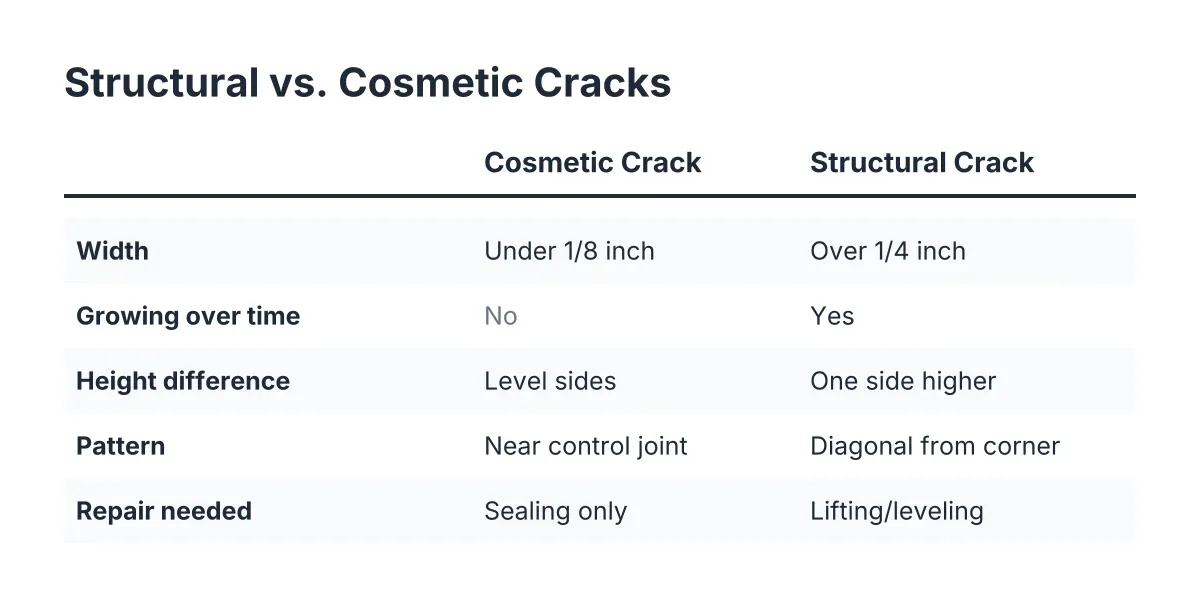
This is the question that matters most, and you can answer a lot of it yourself with a tape measure and five minutes. Structural cracks come from slab movement, while cosmetic cracks do not. Here's how to read the difference.
The Three-Check Inspection You Can Do Today
First, check the width. Cracks narrower than about 1/8 inch, roughly the thickness of two stacked credit cards, are usually cosmetic. Cracks wider than 1/4 inch deserve a closer look, especially if they run the full length or width of a slab section.
Second, check for height difference across the crack. Lay a straightedge or a level across the crack. If one side sits higher than the other, the slab has settled or heaved. This is the clearest single sign of a structural problem. Even a half-inch offset means the soil underneath has moved, and it also creates a trip hazard on walkways.
Third, watch the crack over time. Mark the ends of the crack with a pencil and photograph it with a coin for scale. Check again in a couple of months, since a crack that keeps growing is active. An active crack means ongoing movement, and no surface filler will hold it closed for long.
Other Warning Signs Worth Noting
Beyond the crack itself, look at the slab's context. Does water pool near the crack after rain? Pooling suggests the slab has tilted. Do doors on an attached garage stick, or has a gap opened between the driveway and the garage floor? Both point to settling. Additionally, hollow sounds when you tap the slab with a broom handle can indicate a void underneath, which is often the earliest sign that cracking of concrete is about to accelerate.
To put it simply, narrow, flat, stable cracks are cosmetic, while wide, offset, or growing cracks are structural until proven otherwise. If your inspection turns up any of the structural signs, get a professional assessment before sealing anything. Our Des Moines concrete crack repair service includes exactly this kind of diagnosis, and we'll tell you plainly if filling alone is enough. For a deeper technical reference on crack types and causes, the Portland Cement Association publishes solid material on concrete durability and cracking behavior.
Matching the Repair to the Type of Concrete Crack
Once you know what kind of crack you have, choosing the repair gets much simpler. There are three tiers of fix, and each one solves a different problem. Thinking of repairs in tiers also helps you avoid paying for more work than your slab actually needs.
Tier One: Flexible Fillers and Concrete Caulk
For stable cosmetic cracks, a flexible filler or concrete caulk is the right answer. These products seal the crack against water, which stops freeze-thaw damage from making it worse. The distinction between concrete caulk and rigid filler matters here. Caulk stays flexible, so it tolerates the small seasonal movement every outdoor slab experiences. Rigid fillers work better on interior slabs that don't move much at all. Either way, this is the least expensive tier, and for filling cracks in a concrete driveway that hasn't settled, it's often all you need.
Tier Two: Epoxy Injection
Epoxy sits a level up from filler. Rather than just sealing the surface, epoxy injection bonds the two sides of the crack back together and restores some structural continuity. However, epoxy only makes sense when the slab is stable. If the ground underneath keeps moving, the slab will simply crack again next to the epoxy line. The crack filler vs epoxy decision comes down to one question: does the crack need sealing, or does it need structural bonding on a slab that has already stopped moving?
Tier Three: Lifting and Leveling First
When a crack comes with settling, a height offset, or voids under the slab, you have to fix the foundation problem before touching the crack. That means lifting the slab back to level with mudjacking or polyurethane foam injection, then sealing the crack afterward. This approach costs more than filler, but far less than tearing out the slab entirely. According to HomeAdvisor, mudjacking runs $3 to $6 per square foot and costs 25% to 50% less than full slab replacement. Nationally, concrete leveling averages $1,174, with a typical range of $630 to $1,723, according to Angi and HomeAdvisor data. Additionally, Angi reports that leveling projects can recoup 70% to 90% of their cost in added home value, which makes early action easier to justify financially.
The trap to avoid is underfixing. Filling a crack on a sinking slab feels cheap in the moment, but the crack reopens, the settling continues, and the eventual repair costs more than if you had addressed the cause the first time. With this in mind, spend a few minutes with our crack repair cost guide to see how each tier prices out, and get a diagnosis before you buy a single tube of filler.
Preventing Future Cracking of Concrete
Even after a repair, a little maintenance goes a long way toward keeping new cracks from forming. For example, directing downspouts and gutters away from slab edges reduces the amount of water that can erode soil underneath your driveway or patio. Similarly, keeping tree roots trimmed back from walkways prevents the kind of root-driven lifting that creates jagged, raised cracks. Sealing existing hairline cracks promptly also matters, because it keeps water from working its way in and expanding during winter freezes. Finally, avoid parking heavy vehicles or storing dumpsters on slabs that were only poured for foot traffic. Together, these small habits won't stop expansive clay from moving, but they will slow the pace at which new cracks appear and keep the ones you've already repaired from reopening.
Ready to Get Started?
If you've spotted cracking of concrete on your driveway, walkway, or garage floor, don't wait for another Iowa winter to widen it. Des Moines Concrete Leveling Pros will inspect the crack, tell you honestly whether filling is enough or the slab needs lifting, and quote both options in plain numbers. Reach out today and get a straight answer from a local specialist, not a franchise template.