Self-leveling Concrete — Complete Guide
Selfleveling Concrete: The Complete Guide
If a slab on your property has sunk, cracked, or tilted, selfleveling concrete and modern foam lifting can fix it without a tear-out. This guide explains how these methods work, what they cost in the Des Moines metro, and how each one holds up through central Iowa's freeze-thaw winters. You will also see when a self-leveling overlay makes sense versus lifting the slab with polyurethane foam or mudjacking. We wrote it for homeowners who want a straight answer before they call anyone, especially sellers prepping a listing and owners of newer homes watching their concrete settle.
What You'll Find in This Guide
- Concrete Leveling in West Des Moines, IA
- Concrete Leveling in Carlisle, IA
- Concrete Leveling in Windsor Heights, IA
- Concrete Leveling in Pleasant Hill, IA
- Concrete Leveling in Norwalk, IA
- Concrete Leveling in Waukee, IA
- Concrete Leveling in Grimes, IA
- Concrete Leveling in Clive, IA
- Concrete Leveling in Indianola, IA
- Concrete Leveling in Altoona, IA
- Concrete Leveling in Johnston, IA
- Concrete Leveling in Urbandale, IA
- Concrete Leveling in Ankeny, IA
- How Much Does Self-leveling Concrete Cost?
- Polyurethane Foam Concrete Leveling in Des Moines, IA
- Concrete Leveling in Des Moines, IA
How Self-Leveling Compounds and Foam Lifting Actually Work
People use the term "self-leveling concrete" to mean two different things, and the distinction matters for your wallet. The first meaning is a pourable cement-based compound that flows across a floor and finds its own level. The second is a family of slab-lifting methods, including polyurethane foam injection, that raise sunken exterior concrete back into place. Both count as modern alternatives to tearing out a slab, but they solve different problems, so knowing which one you actually need saves you money before you ever call a contractor.
Self-Leveling Overlays: For Uneven Surfaces, Not Sunken Slabs
A self-leveling overlay works best on interior floors and shallow surface problems. For example, a garage floor with low spots or a basement slab that needs a flat surface before flooring goes down benefits from this approach. You mix the compound, pour it, and gravity spreads it into a level layer. However, an overlay only fixes the surface — it does nothing about the void underneath a slab that sank in the first place. If you pour a leveling compound over a driveway panel that dropped two inches, you add weight to a slab that already lost its support. In practice, that speeds up the settling instead of solving it.
Foam and Mudjacking: Fixing the Root Cause Beneath the Surface
Slab lifting attacks the actual problem, which is the soil below. With mudjacking, we pump a cement slurry through holes in the slab. The slurry fills the void and pushes the slab back up. With polyurethane foam concrete leveling, we inject an expanding foam through dime-sized holes instead. The foam expands, fills every gap, and lifts the slab within minutes. Because the holes are small and the material is light, foam works well on driveways, sidewalks, patios, and steps. When selfleveling concrete overlays won't work for a sunken exterior slab, these lifting methods are the answer.
Which method fits depends on the slab's condition, the load it carries, and how fast you need it back in service. That said, no single method wins every job. We use both, and our concrete leveling service in Des Moines covers when each one earns its place. A heavy, thick slab over a large void may favor mudjacking, while a cracked panel near a garage door on a tight timeline usually favors foam. Because soil conditions vary block to block across the metro, we still recommend an on-site look before you commit to either method.
What Leveling Repairs Cost and How Fast They Cure
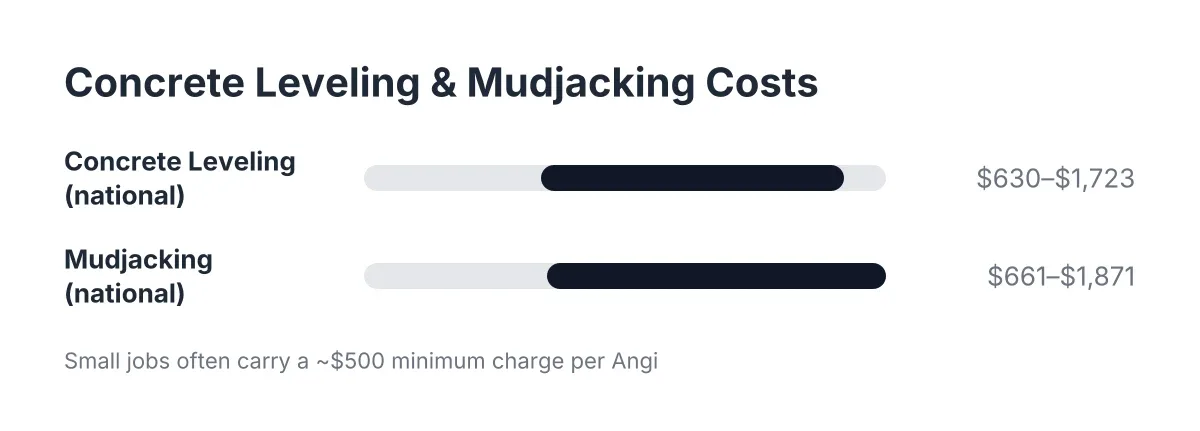
Cost is usually the first question, so here are honest numbers. According to Angi and HomeAdvisor data, the national average concrete leveling cost is $1,174, with a typical range of $630 to $1,723. Additionally, HomeAdvisor pegs mudjacking at $3 to $6 per square foot, which runs 25% to 50% less than replacing the slab entirely. Keep in mind that small jobs often carry a minimum charge of around $500, per Angi, even when the area is under 100 square feet.
Your actual price depends on three things: the size of the area, how far the slab has dropped, and the slab's condition before work starts. As a result, any page that hands you one flat number without seeing your concrete is guessing. For a full walkthrough of what makes a quote climb or shrink, see our self-leveling concrete cost guide.
Cure Time: When Can You Drive on It?
Cure time separates the methods more than almost anything else. Polyurethane foam reaches most of its strength within about 15 minutes of injection. This means you can usually walk on the slab immediately and drive on it the same day. Mudjacking slurry needs longer, typically a day or more before it takes vehicle loads, because the cement mix has to set. Meanwhile, self-leveling overlay compounds fall in between: most accept foot traffic within hours, but flooring or heavy loads should wait per the product's spec sheet.
For a Des Moines seller with a showing on Saturday, that timeline difference is the whole decision. Foam lets you fix a driveway on Thursday and park on it Friday. Beyond that, cure time also affects scheduling around weather. Fall jobs in central Iowa need materials that set before the first hard freeze, and foam's fast cure gives us a wider working window than slurry late in the season.
Durability Through Iowa Winters: Which Fix Holds Up
Central Iowa punishes concrete. Our expansive clay soils swell when wet and shrink when dry, so the ground under your slab moves every year. Then winter stacks freeze-thaw cycles on top of that movement. Water under a slab freezes, expands, heaves the panel, and then drops it when the thaw comes. The National Weather Service office in Des Moines tracks the swings that drive this cycle, and any local homeowner has felt them firsthand. A repair that ignores this climate fails within a few seasons.
This is where material choice matters most. Polyurethane foam does not absorb water, so it will not wash out or soften during a wet spring. Mudjacking slurry is heavier and denser, which suits big slabs, but it can erode over decades if water keeps moving under the concrete. Consequently, we look at drainage before we recommend either one, because fixing the slab without fixing the water path just books a rematch with the same problem. Homeowners in low-lying spots around Clive and Johnston see this pattern often when patios pitch toward the house and pool water at the foundation.
Selling Soon? Level Before You List
If you are prepping a home for market, sunken concrete costs you twice. Buyers see a tripping hazard, and inspectors flag it in the report. However, the fix pays back well: Angi reports that concrete leveling projects can recoup 70% to 90% of their cost in added home value. For sellers in competitive areas like West Des Moines, a level driveway and clean walkway remove an easy negotiation point before it starts.
New Construction Settles Too
Newer homes are not immune to this problem. In fast-growing suburbs like Ankeny and Waukee, builders backfill around foundations, and that disturbed soil compacts over the first several years. As a result, driveways and front walks on five-year-old homes often drop an inch or more at the garage or stoop. Catching it early keeps the fix small, since a slab lifted at half an inch of settling costs far less than one that dropped three inches and cracked.
Choosing Between Overlay and Lifting: A Quick Recap
Before you call anyone, it helps to match the fix to the actual problem you see:
- Uneven interior floor, no sunken slab: a self-leveling overlay compound is likely the right tool, since it creates a flat surface for flooring or coatings.
- Sunken driveway, sidewalk, or patio: foam injection or mudjacking addresses the void underneath, which an overlay cannot reach.
- Tight timeline, need it drivable fast: foam cures in minutes and typically allows same-day vehicle traffic.
- Large slab over a substantial void: mudjacking's denser fill often makes more sense for the load involved.
- Ongoing drainage issues near the slab: fix the water path first, or any repair method will likely fail again within a few years.
This short list will not replace an on-site evaluation, but it should help you ask the right questions when you do call.
Ready to Get Started?
If a slab in the Des Moines metro has sunk, cracked, or started tilting, we can tell you plainly whether foam, mudjacking, or a self-leveling overlay is the right fix for your situation. We level concrete every day, we understand how central Iowa soil behaves, and we will not sell you a method your slab does not need. Reach out for a free assessment and a straight answer.