8 Red Flags to Watch for When Hiring a Concrete Leveling Contractor in Des Moines
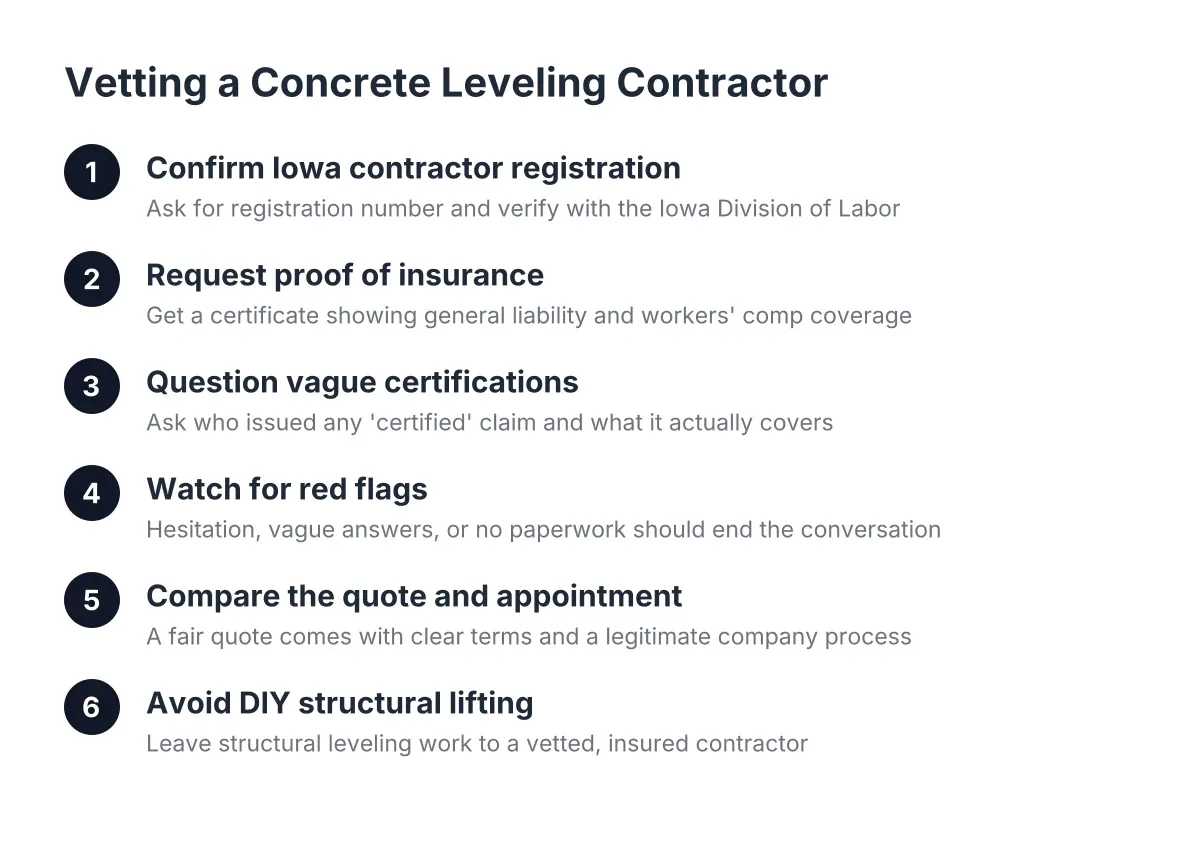
Your inspection report flagged a sunken walkway, your closing date is set, and now three contractors are telling you three different stories. Knowing the concrete contractor red flags to watch for when hiring can reveal which ones separate a solid local concrete repair company from one that will leave you with a patch job a buyer's inspector flags all over again. This list covers the eight warning signs you need to understand.
Here is the situation most sellers face. Suppose a homeowner in Beaverdale gets an inspection report back with "trip hazard at front walk, slab settled 2 inches" written on it, and closing is five weeks out. She does not need a lecture on soil science. She needs the slab lifted, the cracks filled, and the repair to hold up when the buyer's inspector walks the property. The contractor she picks determines whether that happens. These red flags tell you who to skip.
1. They Push Full Replacement Before Looking at the Slab
The first red flag to watch for when hiring is a contractor who recommends tearing out and repouring before anyone has examined the concrete. Replacement is sometimes the right call, but it should be a conclusion, not an opening pitch. According to HomeAdvisor, mudjacking runs 25% to 50% less than replacing a slab entirely, so a company that skips straight to replacement is often skipping straight to the bigger invoice.
A legitimate concrete leveling specialist will check whether the slab is sound enough to lift. If the concrete is cracked into small pieces or crumbling, leveling will not hold and replacement makes sense. However, a slab that settled in one piece, or cracked into a few large sections, is usually a candidate for concrete lifting at a fraction of the cost. For a seller trying to protect her closing budget, that difference is the whole game.
2. They Quote a Price Without Seeing the Job
Nobody can price a concrete leveling job accurately over the phone. The quote depends on how far the slab has sunk, how many sections are involved, what is underneath it, and how hard it is to reach. Fences, underground drainage pipes, previously repoured sections, and slabs that adjoin the settled one can all change the scope. Equipment typically stages in one spot, usually the street or driveway, so a slab that forces hoses through a yard or around a house costs more to reach.
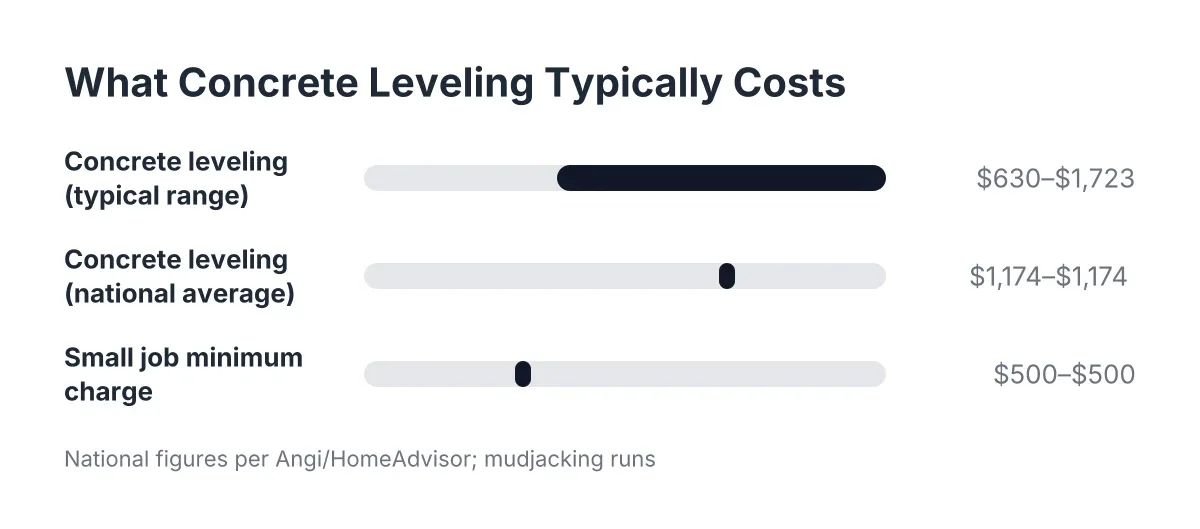
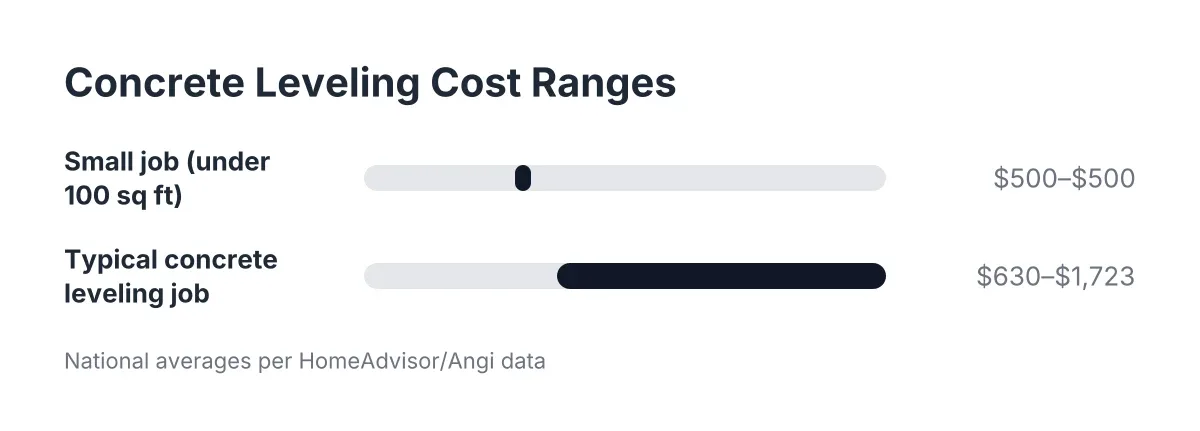
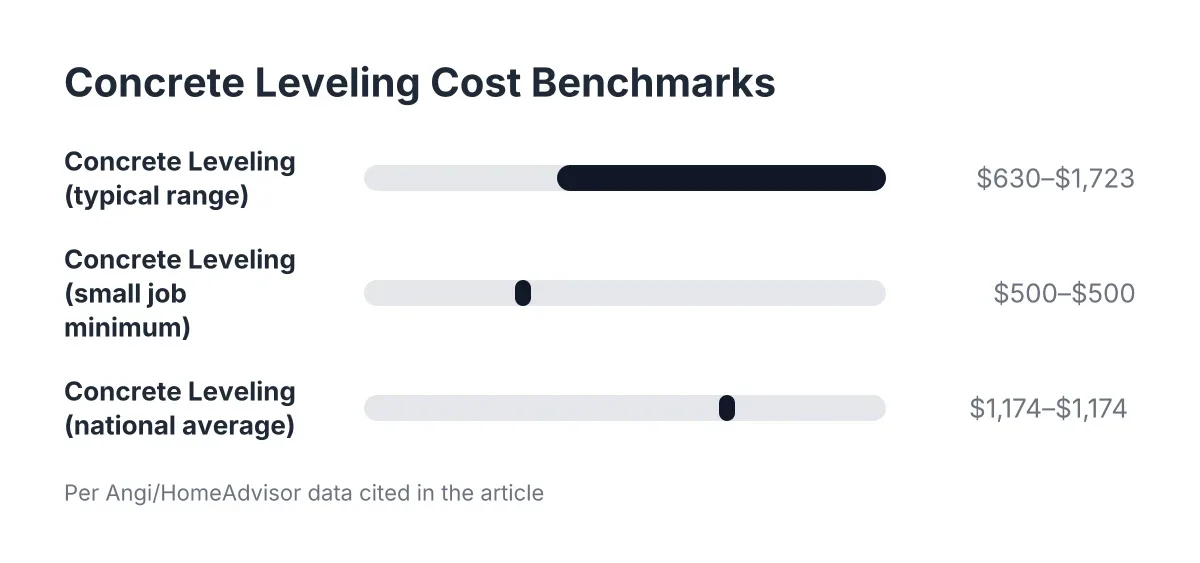
A phone quote that sounds great often grows once the crew shows up, and by then you are committed. For reference, Angi and HomeAdvisor data puts the national average concrete leveling cost at $1,174, with a typical range of $630 to $1,723, and Angi notes small jobs may carry a minimum charge of around $500. If a quote lands wildly outside that territory with no site visit behind it, ask why.
3. Red Flags in Contractors Who Offer Only One Method
Mudjacking and polyurethane foam injection each have jobs they fit and jobs they do not. Slab condition, the load the concrete carries, cure time, and cost all factor in. A contractor who sells one method for every driveway, sidewalk, and garage floor is selling what they own, not what you need.
This matters in central Iowa specifically. Our expansive clay soils swell when wet and shrink when dry, and freeze-thaw cycles work on slabs all winter. The right fix accounts for why your concrete settled in the first place. Ask the estimator to explain why they chose their method for your slab. If the answer is a shrug or a script, keep looking.
4. They Cannot Explain How the Lift Actually Works
Concrete leveling is not mysterious. The process drills holes into the sunken slab, pumps a lifting material underneath to raise and stabilize it, then patches the holes to closely match the original surface, as Wikipedia describes it. A contractor should be able to walk you through that in two minutes of plain English, including where the holes go, how many to expect, and what the patched spots will look like.
Vagueness here is a warning sign. If the person quoting your job cannot describe their own process, they may be a general handyman subcontracting the work, or a lead-generation outfit that sells your job to whoever bids. Either way, you lose the accountability you are paying for.
5. The Quote Does Not Say What Is Covered and What Is Not
Among the concrete contractor red flags you should watch for before hiring anyone, a one-line quote is the easiest to catch. A trustworthy concrete lifting quote states the company's standards, spells out what work is covered versus not covered, and leaves you comfortable with the terms before you sign. "Level front walk, $900" tells you nothing about what happens if the slab resettles in two years.
In addition, watch what the quote leaves out. Here is what a complete concrete leveling quote should include:
- Which slabs or sections will be lifted, listed specifically
- The method being used and why it fits your slab
- Whether crack filling and joint caulking are included or priced separately
- What the warranty covers, for how long, and what voids it
- Total price, payment terms, and any minimum charge
One detail sellers miss: crack repair and caulking after the lift are not cosmetic extras. Skipping the caulking lets water back under the slab, and many companies will not honor a warranty on the repair without it. A quote that omits crack repair entirely is either incomplete or setting up a future dispute.
6. They Have No Local Work You Can Check
Before you commit, ask to see examples of completed projects and check reviews from homeowners in the Des Moines area. Templates and stock photos are not proof. A contractor who has leveled driveways in Urbandale, sidewalks in Windsor Heights, and garage floors on the south side should be able to point to real local work and real local reviews showing they respond when called and stand behind repairs.
National franchise pages often read identical from city to city because they are. Local ground truth matters in this trade, because the fix that works in sandy soil fails in Iowa clay. Reviews also tell you about the part of the job no estimate shows: whether the company picks up the phone after the check clears.
7. They Pressure You Because of Your Closing Date
A tight timeline is exactly when pressure tactics work best, which is why some contractors use them. "Sign today or lose the slot" and "this price expires when I leave" are negotiation tricks, not scheduling realities. A seller with four weeks to closing is a target for this, and a good contractor knows it and does the opposite: explains options, gives you a written quote, and lets you decide.
Get multiple estimates even when the clock is ticking, and ask informed questions at each one. Hiring a concrete leveling contractor under pressure is how homeowners end up paying replacement prices for leveling work, or leveling prices for a repair that does not pass the buyer's inspection. One extra day of comparison can save you the renegotiation at closing that you were trying to avoid.
8. They Encourage Shortcuts That Will Not Survive a Second Inspection
Finally, be wary of anyone proposing a cosmetic fix for a structural problem. Pooling water or uneven spots on a driveway signal an unstable base, and skimming self-leveling concrete over the top does not fix what is underneath. Self-leveling compound has legitimate uses on interior floors, and even there the surface must be mechanically profiled first per manufacturer instructions, according to Lowe's Self-Leveler Plus installation guide. It is not a cure for a sunken exterior slab.
The same caution applies to DIY attempts before you list. A botched DIY lift can damage the slab, make professional leveling harder later, and turn a repairable walkway into a full replacement. Buyers' inspectors look for exactly this kind of masking, and a flagged cover-up hurts a sale worse than the original crack. Done right, the repair is also an investment: Angi reports concrete leveling projects can recoup 70% to 90% of their cost in added home value.
What Concrete Contractor Red Flags Tell You
Flip every warning sign above and you get the hiring checklist. The right contractor inspects your slab in person before pricing it, explains whether mudjacking or foam fits your situation and why, and hands you a written quote that covers the lift, the crack filling, and the warranty terms. They can show local work, they do not flinch when you mention other estimates, and they are honest when a slab is too far gone for leveling.
For a pre-listing seller, that honesty is worth money. A properly leveled walkway with filled cracks reads as a maintained home to a buyer's inspector. A rushed patch reads as a cover-up. Take one extra afternoon to vet the company, and if your slab shows signs of a deeper drainage or foundation issue, bring in the right professional for that problem rather than leveling over it. Knowing which concrete contractor red flags to watch for gets you a repair that holds, an inspection that passes, and a closing that stays on schedule.
If you need concrete leveling, Des Moines Concrete Leveling Pros can help.
Prefer to talk it through? Call +15155828701 — a quick call is usually the fastest way to get a straight answer for your situation.