How Concrete Leveling Contractors Diagnose Sunken Slabs in Des Moines, IA
If you nearly tripped on your own front walk last week, you want to know two things before you hire anyone: what is actually wrong under that slab, and whether the person quoting you knows how to find out. This guide walks through how concrete leveling contractors approach diagnosing sunken slabs, cracked walkways, and settling driveways, step by step. Once you know what a real diagnosis looks like, it gets much easier to compare quotes, spot the companies that are guessing, and choose someone you trust to work at your home in Des Moines, IA.
Here are seven things a good contractor checks before they ever quote your job, and what each one tells you about whether they deserve your business.
1. They Ask Why the Slab Sank Before They Talk About Lifting It
A trustworthy contractor starts with the cause, not the cure. Lifting a sunken slab without fixing what made it sink means the same slab can settle again in a few years. So before anyone talks about mudjacking or foam, they should walk the area and look for the usual suspects.
Around Des Moines, the common causes include natural settling of backfill soil near the foundation, downspouts dumping water right next to the slab, and poor drainage that washes soil out from underneath. Central Iowa's clay soils also swell when wet and shrink when dry, which moves concrete around season after season. A contractor who skips this step and jumps straight to a price is quoting a symptom, not a fix.
For a grandparent worried about a tripping hazard at the porch step, this matters. You want the step level and safe for good, not just until the next wet spring.
2. Diagnosing Sunken Slabs with Measurements, Not Eyeballs
Concrete leveling contractors diagnose settlement by measuring it, usually with a laser level or a long straightedge, not by glancing at the slab and nodding. When diagnosing sunken slabs, measuring tells them how far the slab has dropped, which way it tilts, and how much lift each section needs. A good contractor will show you the numbers so you can see the problem yourself.
This step separates the specialists from the door-knockers. For example, a sidewalk panel that looks "a little off" might be down two inches at one corner and flush at the other. That shape tells an experienced eye where the void sits under the slab and where the lifting material needs to go.
In addition, catching settlement early keeps costs down. A slab that is an inch or two out of level is a smaller, cheaper lift than one that has been sinking for five winters. If you noticed your walkway got worse since last winter, that is a good reason to get it measured now rather than next year.
3. They Check the Slab Itself: Cracks, Condition, and Load
Not every slab can be lifted. Before quoting, a contractor should inspect the concrete's condition: how badly it is cracked, whether the cracks are hairline or wide and crumbling, and whether the slab is thick and sound enough to lift in one piece. A slab broken into small shattered pieces usually cannot be leveled and may need replacement instead.
They should also consider what the slab carries. A garage floor that holds two vehicles needs a different lifting approach than a backyard patio that holds a grill and two chairs. Slab condition, load, and cure time all factor into whether mudjacking or polyurethane foam is the better fit for your job, and an honest contractor explains that choice in plain terms.
This is also where crack filling and crack repair come in. Leveling closes the gap in height; filling the cracks afterward keeps water from getting back underneath. Ask whether crack repair is included in the quote or priced separately, because that varies between concrete leveling companies.
4. They Look Past the Obvious Slab to the Panels Around It
Here is a detail that catches homeowners off guard: fixing only the slab you tripped on can create a new tripping hazard where it meets the next panel. A careful contractor checks the adjoining sidewalk sections, the porch step above, and the driveway panel beside the sunken one. Often the right repair includes lifting a neighboring panel an inch so the whole walkway flows level.
Suppose a grandmother in Beaverdale has a front walk where the second panel sank an inch and a half. If a crew lifts only that panel back to its original height, the third panel, which also settled slightly, now sits lower than the repaired one. She traded one trip edge for another. A good diagnosis catches that before the work starts.
Therefore, when you compare quotes, note which contractors walked the full path from driveway to door and which ones only looked at the single slab you pointed at.
5. They Explain Why Square Footage Alone Cannot Price Your Job
Be cautious of any company that quotes your job over the phone from a square footage number. The visible surface area tells only part of the story. The depth of settling, the number of panels that need lift, and the size of the hidden void under the slab all drive the real cost, and they vary independently.
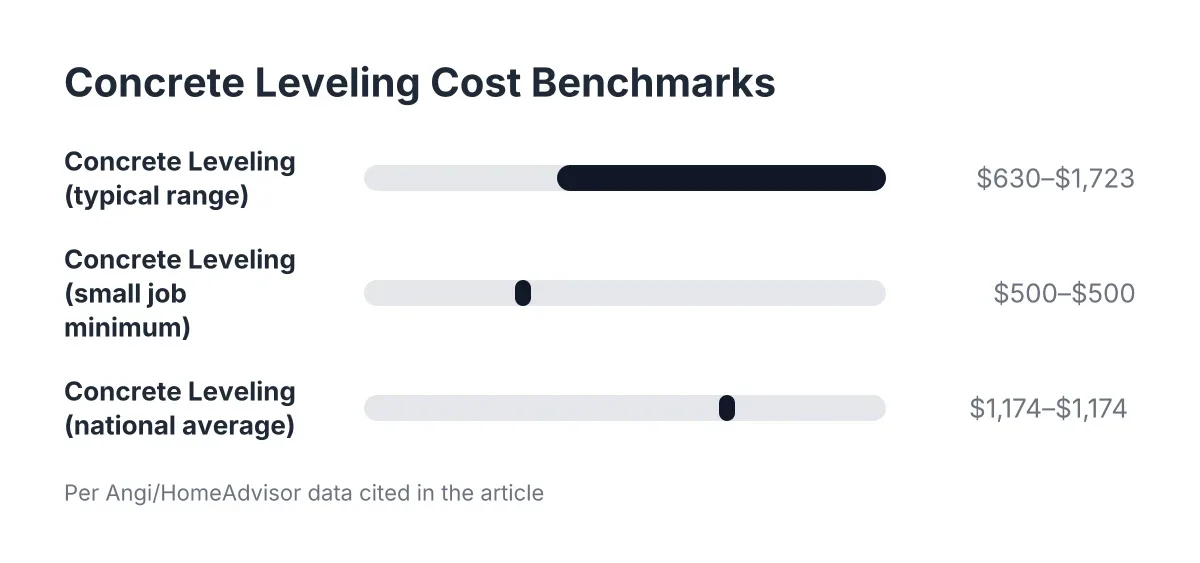
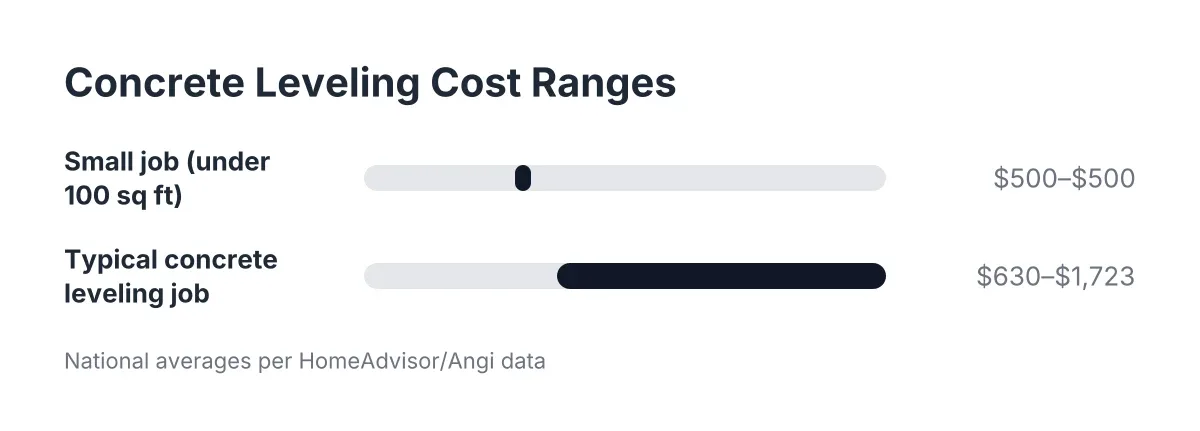
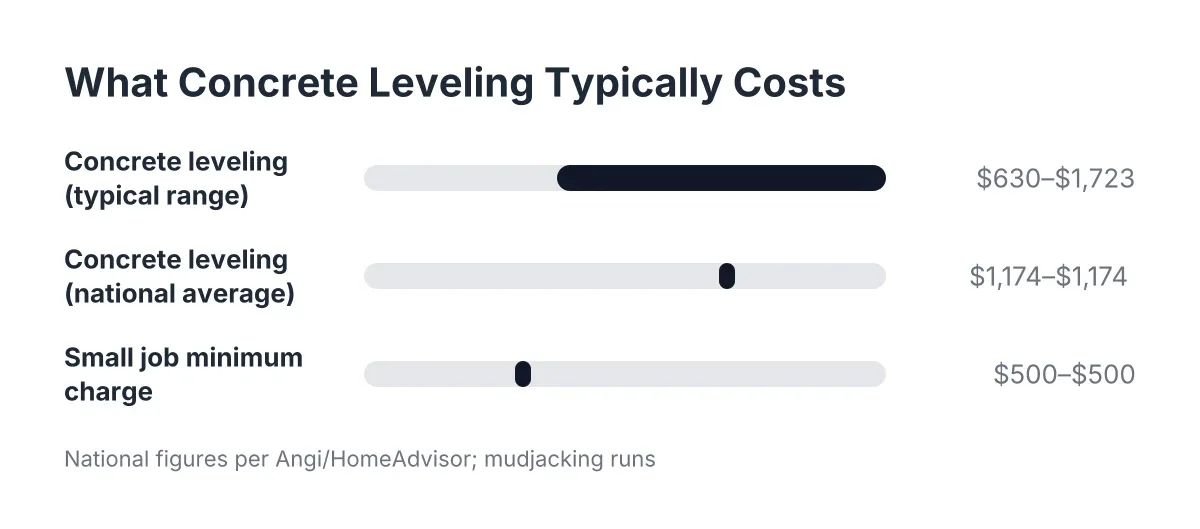
That said, verified national numbers give you a sanity check in 2026. According to Angi and HomeAdvisor, the national average concrete leveling cost is $1,174, with a typical range of $630 to $1,723. HomeAdvisor also reports mudjacking runs $3 to $6 per square foot and costs 25% to 50% less than replacing the slab entirely. For small jobs, like a single porch step or one sidewalk panel, Angi notes many companies apply a minimum charge of around $500.
For a homeowner on a fixed income, those figures help you spot both overpricing and suspiciously cheap bids. A quote far below that range often means a thin, quick lift that will not hold.
6. They Tell You Honestly When Leveling Is Not the Answer
A specialist earns trust by saying no when leveling will not solve your problem. Self-leveling concrete, for instance, only smooths the surface; it does not lift a sunken slab, so if the soil underneath is still moving, the unevenness comes back. Likewise, a slab that has crumbled or settled severely may need replacement, and even then, replacement alone does not fix the soil problem that caused the sinking.
In addition, concrete leveling works best as a repair, not a cosmetic finish. According to Wikipedia, the process drills holes in the sunken slab, pumps lifting material underneath to raise and stabilize it, then patches the holes to closely match the original surface. You will see patched holes afterward. An honest contractor tells you that up front instead of promising the slab will look brand new.
If a contractor says every problem on your property can be fixed with their one method, keep looking. If your issue involves foundation movement under the house itself rather than a flat slab, consult a structural professional before anyone starts pumping material.
7. They Walk You Through the Repair Plan Before Asking for a Signature
The diagnosis should end with a plain explanation you can repeat to your spouse or your kids. That means: which slabs get lifted, which method they recommend and why, how long the work takes, when you can walk or drive on it again, and what the warranty covers in writing. Most residential leveling jobs wrap up in hours, not days, with no excavation and no torn-up yard, which matters if a big construction project is exactly what you want to avoid.
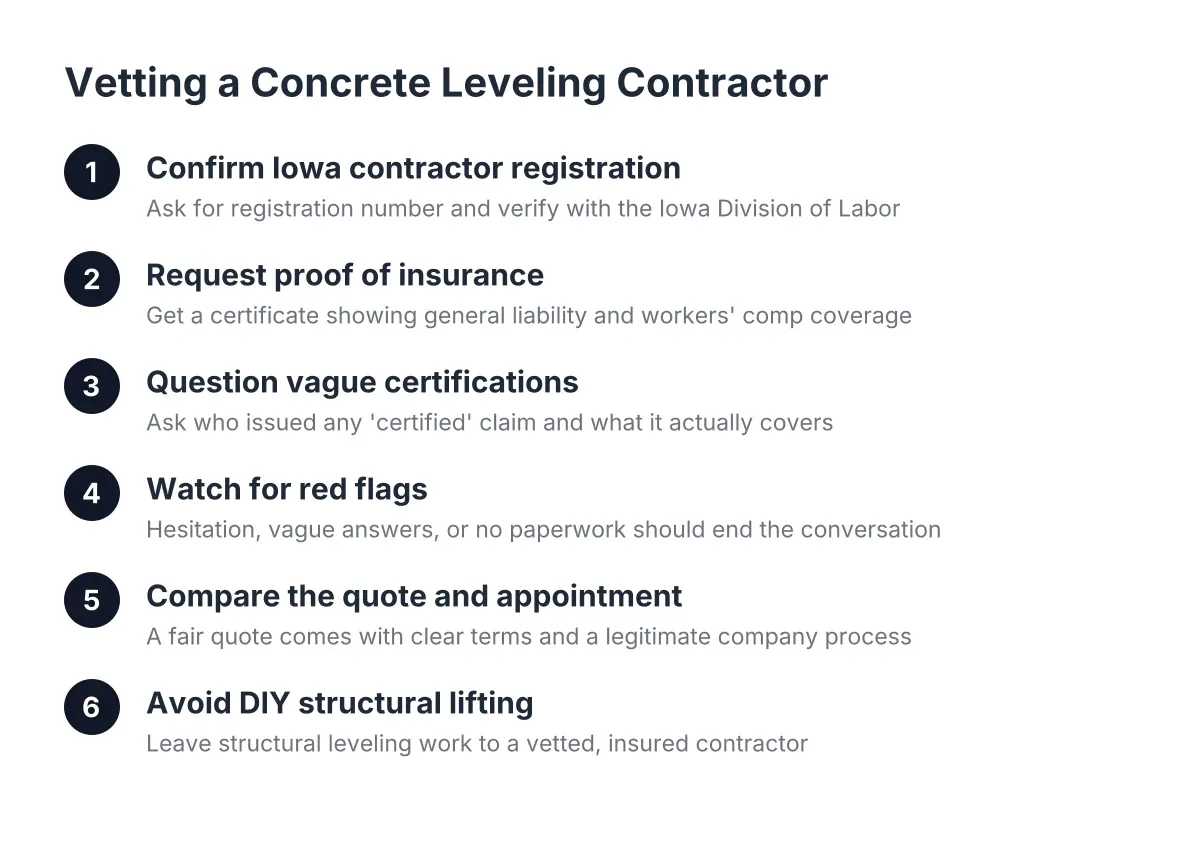
Use this short checklist when you compare concrete leveling companies in Des Moines:
- Did they identify a cause for the settling, not just the symptom?
- Did they measure the drop with a laser level or straightedge and show you?
- Did they check adjoining panels, steps, and drainage, not just the one slab?
- Did they explain the method choice, mudjacking or foam, in plain language?
- Is the quote itemized, with crack filling and any minimums spelled out?
- Is the warranty in writing, with clear terms about resettling?
As a result, the cheapest bid is rarely the right test. The right test is which contractor's diagnosis matched what you can see with your own eyes on your own walkway.
What a Thorough Diagnosis Looks Like When Diagnosing Sunken Slabs at Your Des Moines, IA Home
Say a retired couple on the south side of Des Moines calls three companies about a sunken front step and a tilted sidewalk panel, worried about grandkids running up the walk. In that scenario, the first company quotes $400 over the phone without a visit. The second walks the property for five minutes and names a price. The third measures the drop, finds a downspout draining beside the step, checks the neighboring panels, and explains that lifting two panels plus moving the downspout extension will fix the hazard and keep it fixed.
The third estimate might not be the cheapest, but it is the only one built on an actual diagnosis. That is the difference between hiring a concrete leveling contractor and hiring someone with a pump and a truck. Searching for the best concrete companies near me will surface plenty of names; this process is how you sort real concrete leveling experts from the rest.
There is a payoff beyond safety, too. According to Angi, concrete leveling projects can recoup 70% to 90% of their cost in added home value. A level, safe walkway protects your family and your home's worth at the same time.
Ready to Have Someone Take a Real Look?
Watching how concrete leveling contractors diagnose your slab is the single best way to vet them before you commit. The good ones measure, explain, and give you a written plan; the rest guess and push for a signature. If you have a sunken step, uneven sidewalk, or settling driveway anywhere in the Des Moines metro, reach out to Des Moines Concrete Leveling Pros for an estimate. We will walk the property with you, show you what we find, and explain the fix in plain language, so the next time the grandkids run up the walk, you are not holding your breath.
If you need concrete leveling, Des Moines Concrete Leveling Pros can help.
Prefer to talk it through? Call +15155828701 — a quick call is usually the fastest way to get a straight answer for your situation.