Patio Leveling Cure Time: Mudjacking vs. Polyurethane Foam Speed Compared
If your patio has sunk and you need it fixed before a listing photo shoot or a closing date, patio leveling cure time is the number that matters most. It decides when you can walk on the slab, when the grill and furniture go back, and whether the repair fits your timeline. This guide walks you through comparing the two main methods, mudjacking and polyurethane foam injection, step by step, so you can pick the one that matches your deadline and your budget.
The short version: polyurethane foam is usually ready for foot traffic within about an hour, while mudjacking generally needs 24 to 72 hours before the slab handles full loads. Both restore a sunken patio without the cost or wait of tearing it out. Which one fits depends on your slab, your soil, and how fast you need it done. Here is how to work through the decision.
Step 1: Confirm Your Patio Is a Leveling Candidate, Not a Replacement Job
Start by looking at the slab itself, not just the sinking. Concrete leveling works by drilling holes into the sunken slab, pumping a lifting material beneath it to raise and stabilize it, then patching the holes to closely match the original surface, according to Wikipedia. That process only works if the slab is in solid enough shape to lift as a unit.
Walk the patio and check for these signs:
- Slab sections that have settled or tilted but are still mostly intact
- Cracks that separate the patio into a few large pieces rather than dozens of small ones
- A trip hazard where the patio meets a walkway, step, or door threshold
- Gaps under the slab edge you can see or probe with a screwdriver
If the concrete is crumbling, spalling across the surface, or broken into small chunks, leveling will lift the damage right along with the slab. In that case, replacement or resurfacing is the honest answer, and a leveling specialist should tell you so. For central Iowa patios on expansive clay, settling in one or two corners with the rest of the slab sound is the common pattern, and that is exactly what leveling fixes.
Step 2: What Patio Leveling Cure Time Really Means
Cure time for a leveled patio is not the same as cure time for new concrete. Your existing slab is already fully cured. What needs time is the lifting material pumped underneath it. Until that material sets, the slab is floating on something soft, and loading it too early can push it back down or leave low spots.
This is why the competing advice you find about new concrete needing 28 days does not apply here. Nobody is pouring a new patio. The question is how fast the material under your old patio gets strong enough to carry weight. That answer splits sharply between the two methods, which is the whole reason patio leveling cure time drives the mudjacking versus foam decision.
Step 3: Understanding Mudjacking Cure Time for Your Patio Leveling Project
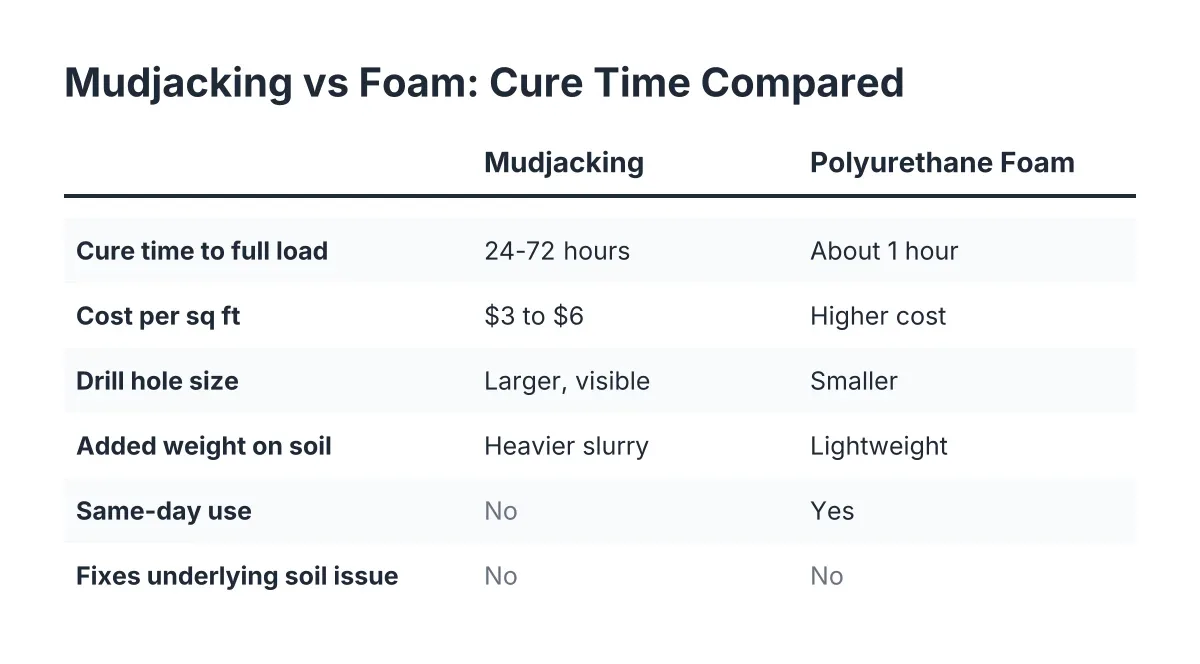
Mudjacking cure time for a patio typically runs 24 to 72 hours before the slab can take full loads like furniture, planters, or a loaded grill cart. The material is a cement-based slurry mixed with soil and sand, pumped under pressure through drilled holes. It lifts the slab immediately, but the slurry needs one to three days to harden, and it stays heavy once it does.
Light foot traffic is often fine sooner, sometimes the same day, but the safe rule is to stay off until the crew tells you otherwise. Weather matters too. Cool, damp Iowa spring weather slows the cure; a dry July stretch speeds it up.
The trade-offs to weigh:
- Cost: Mudjacking is usually the lowest-cost leveling method. According to HomeAdvisor, mudjacking runs $3 to $6 per square foot and costs 25% to 50% less than replacing the slab entirely.
- Weight: The cured slurry is heavy. On soil that is already weak or waterlogged, that added weight can contribute to future settling.
- Holes: Mudjacking needs larger drill holes than foam, which are patched but stay more visible on a patio you want looking sharp for showings.
- Wait: Plan for one to three days before the patio is back in full use.
Step 4: Polyurethane Foam Cure Time and Return to Service
Polyurethane foam cure time is the headline advantage: the foam expands and reaches most of its strength within minutes, and the patio is typically ready for normal foot traffic in about an hour. Crews drill small holes, insert injection ports, and pump a two-part liquid polymer beneath the slab, where it expands and hardens, lifting the concrete back into place.
Once cured, the foam behaves like a rigid plastic. It does not wash out, dry out, or leach away, so the lift itself is expected to hold as long as the soil underneath stays stable. The foam is also lightweight compared to cementitious slurry, so it lifts the slab without adding load to soil that already failed once. On Des Moines clay that swells and shrinks with moisture, that lighter footprint is worth considering.
The trade-offs:
- Cost: Foam usually costs more per square foot than mudjacking for the same patio.
- Speed: Same-day use is realistic. A morning job can host dinner on the patio that evening.
- Holes: Smaller drill holes, which matters on a patio buyers will look at up close.
- Soil fix: Neither method fixes the underlying soil problem. If a downspout is dumping water under the slab, address that too or the patio can settle again.
Step 5: Match the Method to Your Deadline
Now put the patio leveling cure time numbers against your calendar. Suppose a homeowner in Beaverdale has an inspection re-check scheduled Friday, and it is Tuesday. Either method works; mudjacking done Tuesday is fully load-ready by Friday, and the lower cost helps when every pre-closing dollar counts. But if the re-check is tomorrow morning, foam is the only option that has the patio walkable and level in time.
Use this quick guide:
- More than a week out: Either method fits. Let cost, slab condition, and soil weight tolerance decide.
- Two to four days out: Mudjacking still works if scheduled immediately; foam gives you slack if weather delays the job.
- 24 to 48 hours out: Polyurethane foam. The one-hour return to service is the deciding factor.
- Hosting or photographing the patio soon: Foam's smaller patch holes photograph better on light-colored concrete.
For sellers, there is a resale argument for fixing it at all. According to Angi, concrete leveling projects can recoup 70% to 90% of their cost in added home value. A level patio also removes the trip hazard an inspector already flagged, which is what keeps a buyer from renegotiating over it. One caution: keep your invoice and disclose the repair. Patio leveling is a legitimate, accepted fix, and documentation from a specialist answers the second inspector's questions before they get asked.
Step 6: Budget for the Job, Including Minimums
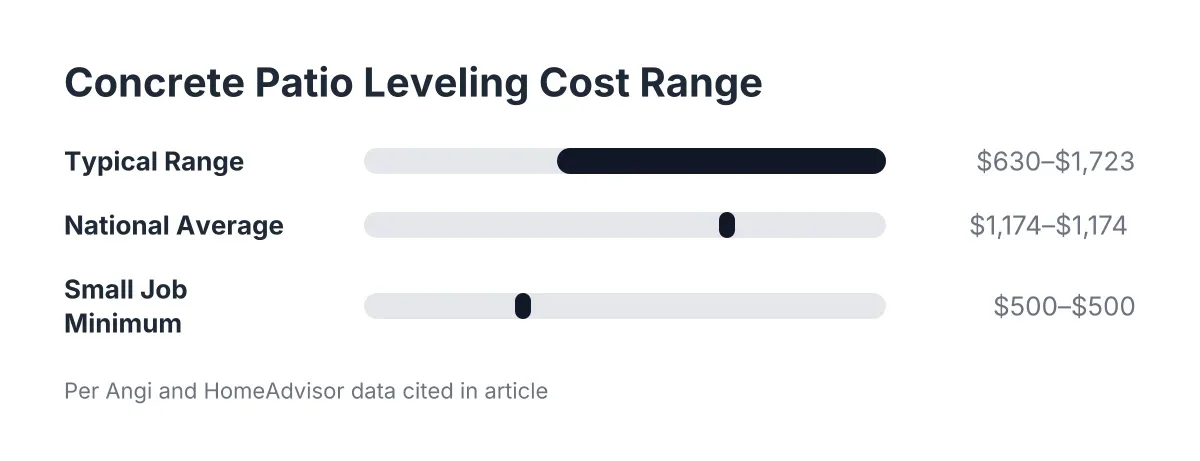
Get square-foot pricing in writing before you schedule. Concrete leveling is priced by area, so a single sunken corner costs far less than releveling the whole patio. Small jobs often carry a minimum, though; according to Angi, small mudjacking jobs may face a minimum charge of around $500 even when the affected area is under 100 square feet.
As an illustrative estimate, a 150-square-foot sunken patio section might land in the $500 to $1,500 range with mudjacking, with foam somewhat higher for the same footprint. Both sit well below tear-out and repour, which is the point for a seller who does not want to fund a new patio for the next owner. Ask each contractor to state the cure time and return-to-service window for their material on your quote, so the schedule commitment is in writing.
Step 7: Handle Cracks and Surface Repairs After the Lift
Leveling raises the slab, but it does not erase cracks. Once the patio is back to grade, have the cracks filled so water cannot get underneath and restart the settling, especially before an Iowa freeze-thaw cycle. Crack filling on the same visit is cheap insurance and cleans up the look for photos.
If the surface is worn but sound, resurfacing after leveling can give the patio a uniform finish. Skip DIY self-leveling compound as a shortcut here; it is a topping product, not a lift. Manufacturer instructions typically require the concrete surface to be mechanically profiled before the leveler goes down, according to Lowe's Self-Leveler Plus installation guide, and the dry powder is hazardous to breathe, so Sakrete's guidance calls for a respirator when mixing. It fixes shallow surface dips, not a slab that has dropped an inch at one corner.
One more comparison worth settling: some homeowners search for how to lay pavers for a walkway or hunt paver patio ideas on a budget as an alternative to fixing the concrete. Pavers over a proper base of concrete sand can look great, but tearing out a slab and building a paver base costs more time and money than leveling the slab you have. If the concrete is sound, lift it.
Step 8: Verify the Work Before You Load the Patio
After the crew finishes, check the results before the material fully cures and again after. Set a level across the repaired joints, confirm the trip hazard at the walkway transition is gone, and look at the patched holes. Then respect the cure window: about an hour for foam, one to three days for mudjacking, and confirm the specific timing with your contractor since materials and site conditions vary.
If the patio sits over questionable soil, near a foundation, or shows movement again within weeks, bring in a professional to look at drainage and soil before repeating the repair. Leveling fixes the symptom fast; only fixing the water and soil problem keeps it fixed.
The Bottom Line on Patio Leveling Cure Time for Project Planning
Both methods lift a sunken patio the same day. The difference is what happens after the pump shuts off. Polyurethane foam is walkable in about an hour and adds no weight to weak soil; mudjacking costs less but asks for one to three days and adds heavy material underneath. Match that gap to your closing date, your inspection re-check, or your next backyard gathering, and the choice usually makes itself.
If you need concrete leveling, Des Moines Concrete Leveling Pros can help.
Prefer to talk it through? Call +15155828701 — a quick call is usually the fastest way to get a straight answer for your situation.