Patio Leveling — Complete Guide
Patio leveling restores a sunken or uneven concrete patio to a flat, safe, usable surface without tearing it out and pouring new. For Des Moines homeowners, that matters twice over: a settled slab is a trip hazard and a drainage problem, but it is also the space where you grill, entertain, and add curb appeal before a sale. This guide explains why patios sink in central Iowa, which repair method fits your slab, and what the work actually costs. By the end, you will know whether leveling your patio, resurfacing, or full replacement makes sense for your home, and what to expect when you call a contractor.
What You'll Find in This Guide
Why Patio Slabs Sink in Des Moines
Patio slab settling almost never starts with the concrete itself. Instead, the problem lives in the soil underneath. Central Iowa sits on expansive clay soils that swell when wet and shrink when dry. Over years of that cycle, the ground under your patio compresses unevenly. As a result, the slab loses support in spots, and gravity does the rest.
Freeze-thaw cycles make it worse. Des Moines winters push frost deep into the ground, and each freeze heaves the soil slightly. Each thaw lets it settle back, rarely in exactly the same place. You can check local climate patterns through the National Weather Service Des Moines office, but any homeowner who has lived here through a few winters knows the drill. Concrete moves, and patios move most because they carry no structural load holding them in place.
Water is the third culprit. Downspouts that dump next to the patio, poor grading, and clogged gutters all wash fine soil out from under the slab edge. Consequently, the side of the patio closest to the house often sinks first. That creates a slope that drains water toward your foundation instead of away from it. What started as a cosmetic annoyance becomes a foundation risk if you ignore it long enough.
Warning Signs Worth Acting On
Watch for a few specific signals that your slab needs attention. A gap opening between the patio and the house means the slab is pulling away or dropping. Cracks that widen over a season, rather than staying hairline, indicate active movement, and they tend to get worse fast once they start. Additionally, pooling water after rain tells you the surface no longer drains the way it was poured to. Doors on a patio-adjacent slab that stick or scrape can also point to settlement nearby.
None of these problems fix themselves. However, catching them early keeps the repair simple and inexpensive. A slab that has dropped an inch is a straightforward lifting job. A slab that has dropped four inches and cracked into pieces may need more extensive crack repair alongside the lift, or in rare cases replacement. To put it simply, the sooner you address a sunken patio, the cheaper the fix tends to be.
How Contractors Fix an Uneven Patio: Mudjacking, Foam, and Resurfacing
Homeowners searching for how to fix an uneven concrete patio usually find three options: mudjacking, polyurethane foam injection, and resurfacing. Each solves a different problem, and the franchise networks rarely explain the difference honestly. Here is the plain version, section by section, so you can weigh the trade-offs before a crew ever shows up.
Mudjacking: The Proven Approach to Patio Leveling
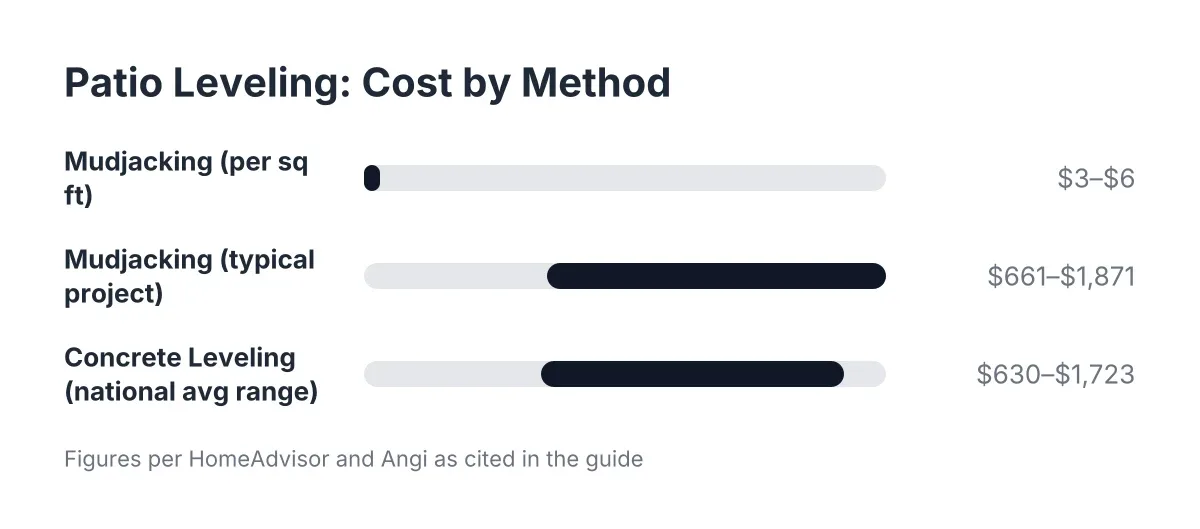
Mudjacking pumps a cement-based slurry through small holes drilled in the slab. The slurry fills the voids underneath and lifts the concrete back to grade. It works well for patios because the material is dense, affordable, and forgiving on larger slabs. According to HomeAdvisor, mudjacking runs $3 to $6 per square foot and costs 25% to 50% less than replacing a slab entirely. The trade-offs: the drill holes are larger than foam requires, the slurry adds weight to already-weak soil, and you should stay off the patio for a day or so while it cures.
Polyurethane Foam: Lighter and Faster
Foam injection pushes expanding polyurethane through dime-sized holes. The foam expands, fills voids, and lifts the slab with precision. Because the material weighs a fraction of slurry, it puts almost no new load on the soil below. It also cures in minutes, so you can use the patio the same day. However, foam costs more per square foot than mudjacking. For a patio you plan to entertain on that weekend, or a slab over soft soil, foam often justifies the premium. For a large, simple lift, mudjacking usually wins on price, and most Des Moines crews will say so upfront.
Resurfacing Versus Leveling: What Each One Actually Fixes
This distinction trips up a lot of homeowners. Resurfacing applies a thin overlay to hide surface flaws like spalling, discoloration, or shallow cracks. It does nothing about elevation. In other words, resurfacing a sunken patio gives you a prettier slab that still slopes toward your house. Leveling corrects the elevation but does not refresh a worn surface. In practice, many patios need the lift first and resurfacing second, especially for pre-listing sellers who want the slab both flat and attractive.
A good contractor will tell you which you need instead of selling you both by default. That said, be wary of anyone who recommends a full replacement before even discussing a lift, since replacement is rarely the cheapest path to a flat surface. Method choice also drives the price, which the patio leveling cost guide walks through in detail alongside real Des Moines project numbers.
What Leveling a Patio Costs and What It Returns
Cost is the first question most homeowners ask, and it deserves a straight answer. National data gives you a useful baseline. According to Angi and HomeAdvisor, the average concrete leveling job costs $1,174, with a typical range of $630 to $1,723. Mudjacking specifically averages around $1,232, with most projects landing between $661 and $1,871, per Angi. Additionally, expect a minimum charge of around $500 on small jobs, even if the sunken area is under 100 square feet, since crews have to mobilize equipment either way.
Your actual price depends on three variables: slab size, how far the patio has dropped, and the method you choose. A modest corner lift on a 200-square-foot patio sits at the low end. Meanwhile, a large multi-slab patio with deep voids and crack repair pushes toward the high end. The full cost guide breaks down each variable with Des Moines-specific numbers, so you can estimate before anyone visits your home. Getting a rough number in advance also makes it easier to compare quotes apples-to-apples when contractors describe scope differently.
The Resale Math for Pre-Listing Sellers
If you are preparing to sell, a sunken patio works against you twice. Buyers see it as deferred maintenance, and home inspectors flag trip hazards and negative drainage in their reports. Either one can trigger a repair credit request that costs more than the fix itself. The good news: leveling pays back well. According to Angi, mudjacking and concrete leveling projects recoup 70% to 90% of their cost in added home value. Few pre-sale repairs return that much, and almost none photograph as well in a listing. For sellers weighing which repairs to prioritize before putting a house on the market, a flat, crack-free patio is often one of the highest-return items on the list.
The Safety Math for Owner-Occupiers
For homeowners staying put, the calculation is about risk and use. An uneven patio edge is exactly the kind of hazard that catches a guest's toe during a summer cookout. Beyond that, a slab tilted toward the house sends every rainstorm at your foundation. Cracked patio repair options range from simple crack filling after a lift to full joint sealing, and addressing them protects the leveling work you paid for. With this in mind, think of leveling as both a safety fix and an investment in the outdoor space you actually use, not just a line item on a repair list. Either way, the underlying goal stays the same: a flat, well-drained patio that holds up through another cycle of Iowa freeze and thaw.
Ready to Get Started?
If your patio has settled, cracked, or started draining the wrong way, a local specialist can tell you in one visit whether mudjacking or foam is the right fix and what it will cost. Des Moines Concrete Leveling Pros levels patios across the metro with honest recommendations based on your slab, your soil, and your timeline. Reach out for a straightforward assessment and get your patio back to level before the next season of backyard weather.