Patio Leveling Permits and Regulations in Des Moines: FAQ for Homeowners
You have decided to fix that sunken patio. Good call, both for safety and for how the backyard looks when family comes over. Now you want to know about patio leveling permit rules in Des Moines before a crew shows up. The short answer is reassuring: lifting an existing slab back into place is treated differently than pouring new concrete, and in most cases the paperwork is light or nonexistent. This FAQ walks through the common questions so you can schedule the work with confidence.
Do I need a permit for patio leveling in Des Moines?
Leveling an existing patio in Des Moines generally does not require a building permit, because you are repairing concrete that is already there, not building a new structure. Mudjacking and polyurethane foam injection lift the slab you own back to its original height. That is maintenance, not construction, in the eyes of most local building departments.
However, rules can change and situations differ, so it is worth a five-minute phone call to your city's permitting office before work starts. Des Moines, Ankeny, Waukee, Clive, and Johnston each handle residential permits through their own offices. A quick call removes the guesswork, and a reputable contractor will tell you plainly if your job is an exception.
When do patio leveling permits and regulations actually come into play?
Patio permits and regulations matter most when the project goes beyond lifting the existing slab. Tearing out the patio and pouring a new one, enlarging the footprint, or adding a roof or attached structure can all trigger a permit. Repairs that change drainage toward a neighbor's property can also draw attention from the city.
For example, say a homeowner in an Ankeny subdivision built in 2019 has a patio that sank two inches where fill soil settled. Lifting that slab back to grade needs no permit in a typical case. But if that same homeowner decided to demolish the patio and pour a bigger one with a pergola on top, the city would likely want plans and a permit application first.
Here are the situations most likely to require a permit or city review:
- Pouring a brand-new patio or expanding an existing one
- Adding a covered structure, screen room, or pergola attached to the house
- Work that changes grading or sends runoff onto a neighboring lot
- Concrete work in a public right-of-way, such as the sidewalk along the street
- Projects in a historic district or a neighborhood with an HOA architectural review
Who is responsible for pulling a permit if one is needed?
If a permit is required, the contractor doing the work usually pulls it, and you should expect them to handle that paperwork as part of the job. Ask about it during the estimate. A contractor who shrugs off the question or tells you to pull it yourself for their work is waving a flag.
For straightforward patio leveling, there is typically nothing to pull. Still, get that answer in writing on your estimate. A clear line that says "no permit required for this repair" protects you later, especially if you sell the house and a buyer's inspector asks questions.
Does my HOA have rules about patio leveling?
HOA rules in newer Des Moines metro subdivisions rarely restrict repairs, but many require notice or approval for visible exterior changes. Leveling restores the patio to its original condition, which most covenants treat as maintenance. The specific patio leveling permit rules you must follow may vary by neighborhood, so check your covenants anyway, because some HOAs ask for a simple form even for repair work.
In addition, if your repair includes resurfacing or crack filling that changes the patio's color or texture, that cosmetic change is more likely to need HOA sign-off than the lift itself. A two-line email to your HOA board before the job keeps everyone happy.
What about sidewalks and the public right-of-way?
The sidewalk between the street and your yard sits in the public right-of-way, and cities in the metro regulate work there more closely than work on a private patio. Des Moines and surrounding communities often require a right-of-way permit for sidewalk replacement, and some have programs addressing sidewalk repair responsibility.
Therefore, if your project combines patio leveling with sidewalk leveling out front, treat them as two different situations. The patio behind your house is your call. The public sidewalk may involve the city, so ask your contractor to confirm the local rule for your address. For a grandparent worried about a grandchild tripping on a raised sidewalk edge, this is worth sorting out early rather than after a fall.
Will leveling instead of replacing keep me out of permit territory?
Yes, and that is one of the quieter advantages of lifting over replacing. Concrete leveling works by drilling small holes in the sunken slab, pumping material underneath to raise it, and patching the holes to blend with the surface, according to Wikipedia. Nothing new is built, so there is usually nothing to permit.
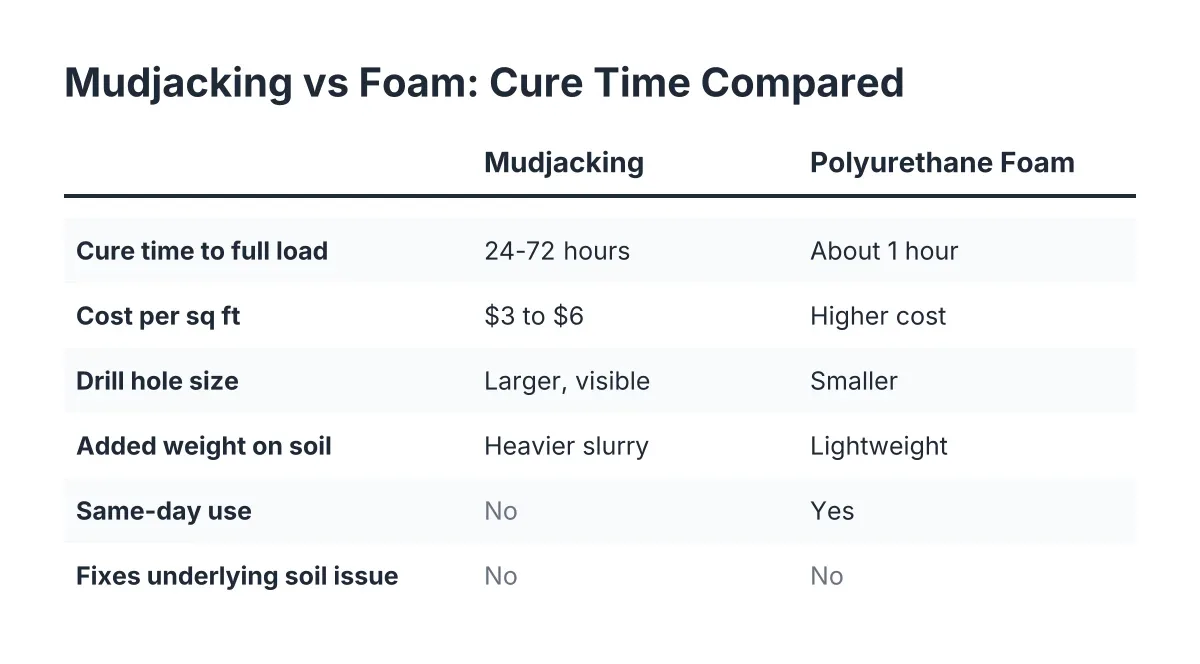
Replacement is a different story. A full tear-out and repour is new construction, which can mean permit fees, inspections, and waiting. It also costs more; mudjacking runs 25% to 50% less than replacing a slab entirely, according to HomeAdvisor. For a retiree on a fixed income, leveling avoids both the construction disruption and the paperwork.
Do regulations affect what patio leveling costs in 2026?
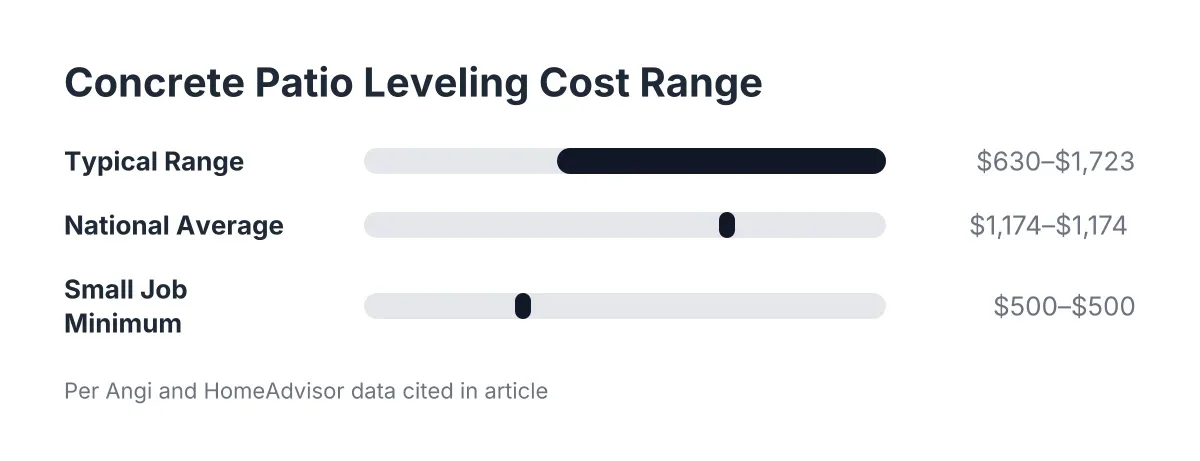
Permit fees rarely factor into patio leveling cost, since most leveling jobs need no permit at all. The national average for concrete leveling is $1,174, with a typical range of $630 to $1,723, according to Angi and HomeAdvisor data. Small jobs may carry a minimum charge of around $500 even for areas under 100 square feet, according to Angi.
What moves the price more than any regulation is the job itself. Leveling is priced by the square foot, and obstacles raise the number. Fences, buried drainage lines, and slabs that adjoin the settled one can all add work. Crews stage their equipment in one spot, usually the driveway or street, so a backyard patio that forces long hose runs through a tight yard can cost more than a front walkway.
One more point worth knowing while you plan: the fix tends to pay for itself. Concrete leveling projects can recoup 70% to 90% of their cost in added home value, according to Angi. That matters whether you are making the patio safe for grandkids or getting a newer home ready to sell.
What if I want to add pavers or build new instead of leveling?
New paver work follows different rules than repair work, and a freestanding paver patio at grade often skips the permit a poured slab or attached structure would need. If you have been reading up on how to install pavers for beginners, or guides on how to build a paver patio without digging, confirm your city's rules first. Height, footprint, and drainage are what cities care about, not the material.
Pavers also bring their own maintenance questions, from choosing polymeric sand colors for the joints to dealing with settling later. Patio leveling permit rules on central Iowa's expansive clay mean that a paver patio can sink and shift just like a poured slab. If your existing concrete is sound but sunken, leveling it is usually the simpler, cheaper, and lower-paperwork path.
How do I make sure the repair holds up after the crew leaves?
A leveled patio stays level when water stays away from it, and that part is on you. The same soil movement that sank the slab will sink it again if downspouts keep dumping water along the edge. No permit or regulation covers this; it is plain upkeep.
Keep these habits after the repair:
- Extend downspouts so they discharge well away from the patio and foundation.
- Fix leaky or overflowing gutters before the next heavy rain.
- Keep soil graded to slope away from the slab, and replace any backfill that washes out.
- Seal joints and cracks so water cannot work underneath the concrete.
- Watch for burrowing animals, which can hollow out support under a slab.
When should I call a professional instead of going it alone?
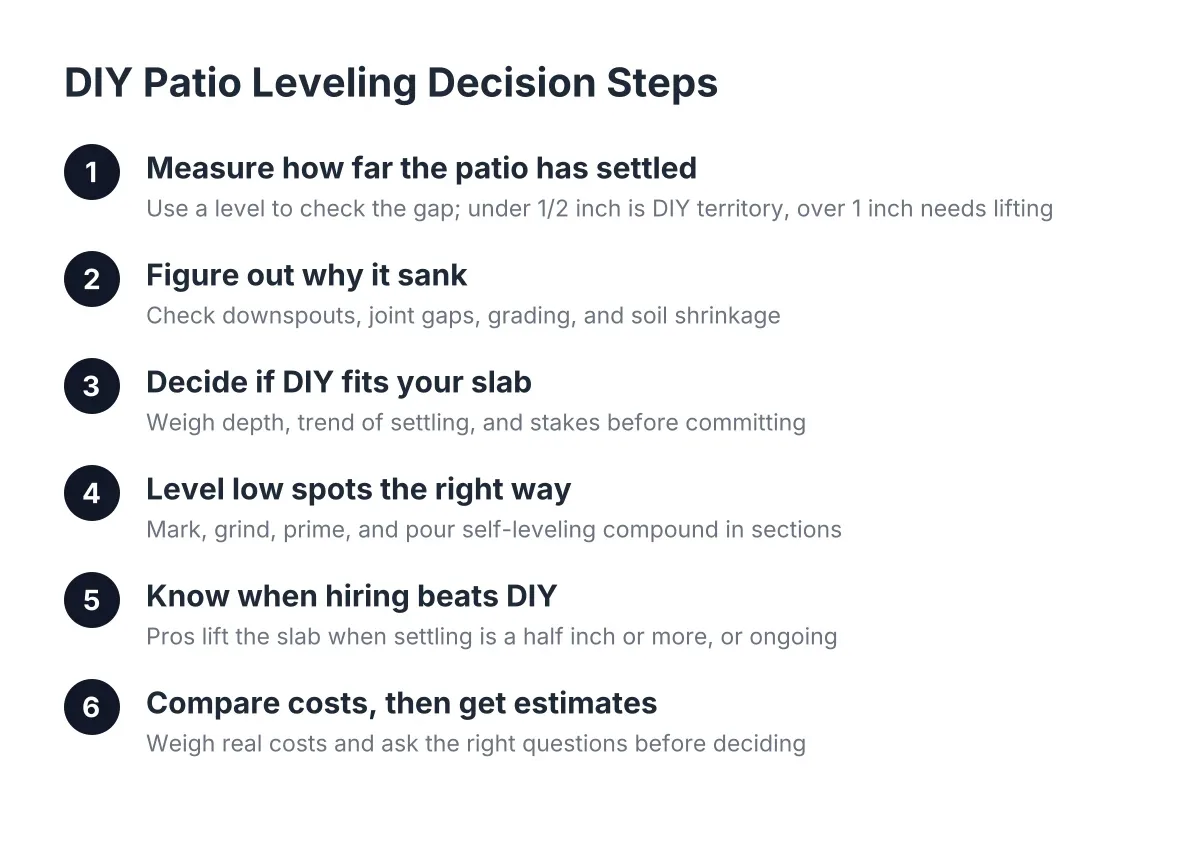
Call a professional when the patio has dropped more than an inch or two, when cracks are wide or growing, or when the slab is pulling away from the house. Those signs can point to a drainage problem or ongoing settling that a surface fix will not solve. Leveling also cannot repair a slab that is crumbling or broken into small pieces; honest contractors will tell you when replacement is the better answer.
Finally, get more than one estimate and ask each contractor the same questions: Does this job need a permit? Which lifting method fits my slab? Will you level the adjoining panels so there is no new trip hazard where the lifted section meets the old grade? The answers tell you as much about the contractor as the price does. Sorting out patio leveling permits and regulations is the easy part; picking someone who explains the work plainly is what makes the project go right.
If you need concrete leveling, Des Moines Concrete Leveling Pros can help.
Prefer to talk it through? Call +15155828701 — a quick call is usually the fastest way to get a straight answer for your situation.